Bedbug Fumigation in Nairobi
Bedbugs are the hardest household pest to clear, and the one most often treated badly. Two visits, done properly, ten to fourteen days apart. Anyone promising one is guessing.
- Two-visit treatment
- Discreet arrival
- Preparation checklist provided
Why One Treatment Is Never Enough
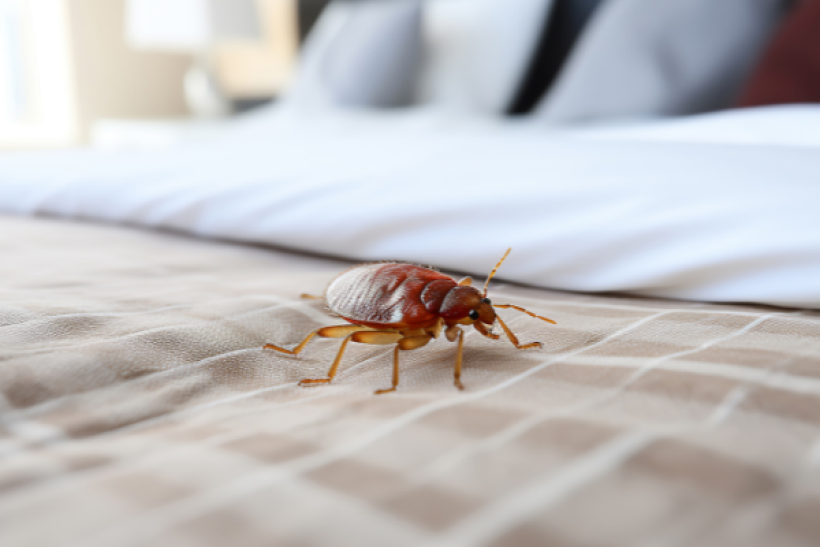
Bedbug eggs are laid in seams, screw holes and cracks, and they are largely unaffected by the spray that kills the adults. They hatch over the following one to two weeks. If nobody returns in that window, you are back where you started, except now the survivors have scattered further.
They are also flat enough to hide almost anywhere: mattress piping, the joints of a wooden bed frame, behind the headboard, in the skirting, inside a bedside drawer runner, even behind a wall socket or a picture frame. Treating just the mattress is why so many people believe fumigation does not work on bedbugs.
They are not a sign of a dirty house. They travel in luggage, second-hand furniture and taxis, and they turn up in immaculate homes and good hotels. Nobody here is going to make you feel bad about it.
- Itchy bites in a line or cluster, usually on arms, shoulders or legs
- Small dark spots on sheets, mattress seams or the bed frame
- A sweet, musty smell in a badly infested room
Our Bedbug Treatment
Inspection
We check the bed, frame, headboard, skirting, seating and surrounding furniture to find the harbourage and confirm how far it has spread.
First treatment
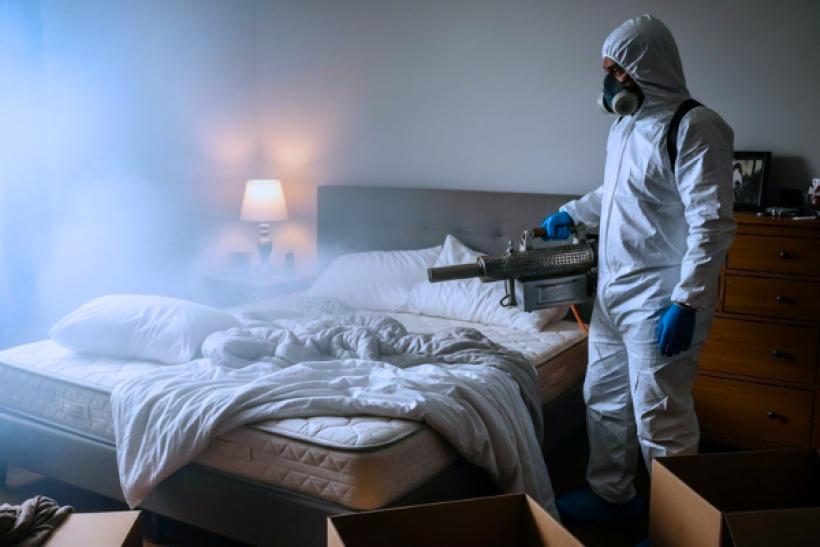
Steam where suitable, then a residual application to seams, frame joints, screw holes, skirting and cracks. The room stays empty for four to six hours.
Second treatment
Ten to fourteen days later we return and repeat, catching everything that hatched after the first visit. This is the visit that decides the outcome.
Confirmation
We check for live activity at the second visit. If there is still evidence after the agreed window, we come back again.
How to Prepare
Preparation makes a real difference to the result. None of it is difficult.
| Before we arrive | What to do | Why |
|---|---|---|
| Bedding | Strip all bedding and wash at the hottest temperature the fabric allows, then dry thoroughly | Heat kills every life stage including eggs. This removes a large part of the problem before we start. |
| Clothing and fabric | Bag anything from the affected room. Wash and dry on high heat, or keep sealed until after the second visit | Stops you carrying them to another room while the treatment is running |
| Clutter | Clear the floor and empty bedside drawers | We need access to skirting, frame joints and cracks. Clutter is where they survive. |
| Furniture | Pull beds and seating away from the walls if you can | Lets us treat the wall junction, a favourite harbourage |
| Pets and fish | Remove pet bedding and bowls, cover fish tanks | Standard precaution for any residual treatment |
| After treatment | Stay out four to six hours, then ventilate before sleeping in the room | Allows surfaces to dry and the room to clear |
Do not spray the room yourself before we come. Over-the-counter aerosols scatter bedbugs into neighbouring rooms and make the job harder and more expensive.
What We Do Differently
Bedbug work either succeeds completely or it fails. There is very little in between, and it usually comes down to the second visit.
- Two visits, quoted as one job. The follow-up is included from the start. It is not an upsell after the eggs hatch.
- We treat the room, not the mattress. Frame joints, skirting, headboard, seating and cracks all get done, because that is where they actually live.
- Discreet arrival on request. This matters for flats, hotels, hostels and Airbnb hosts, and we take it seriously.
- Honest scope. If a mattress or a divan base is too far gone to save, we tell you rather than treat it twice and charge you twice.
Frequently Asked Questions
How long does it take to get rid of bedbugs?
Expect three to four weeks end to end. The first treatment kills the active adults and nymphs, the second, ten to fourteen days later, catches what hatches from eggs. You may see the odd one between visits, which is normal and not a sign the treatment failed.
Do I have to throw away my mattress?
Usually not. Most mattresses can be treated and kept. Occasionally a heavily infested divan base or a badly damaged mattress is not worth saving, and we will tell you straight rather than treat it repeatedly.
Does having bedbugs mean my house is dirty?
No. Bedbugs travel in luggage, second-hand furniture, taxis and delivered parcels. They are found in spotless homes and in good hotels. Clutter gives them more places to hide, but cleanliness is not what attracts them.
Can I sleep in the room that night?
Stay out for four to six hours after treatment, then ventilate the room well. After that you can sleep there, and you should. Moving to the sofa spreads them to the sitting room, which is the most common way a contained problem becomes a whole-house one.
Will you come back if they return?
Yes. The second visit is part of the job. If there is still live activity after the agreed window following the second treatment, we return at no extra cost.
Can you treat a hotel, hostel or Airbnb?
Yes, and discreetly. We schedule around occupancy, treat adjoining rooms where there is any risk of spread, and arrive unmarked if you ask us to.
Which areas do you cover?
Nairobi and the towns around it: Westlands, Kilimani, Lavington, Kileleshwa, Runda, Ruaka, Karen, Lang’ata, South B, South C, Embakasi, Ruiru, Kikuyu, Ngong, Kitengela and Syokimau. If you are just outside, ask.
Deal with it properly, once
Send us a photo of the bites or the mattress seam and we will tell you what you are dealing with.
Other services
We also handle all other pests, home and office relocation, cleaning and transport and logistics across Nairobi.