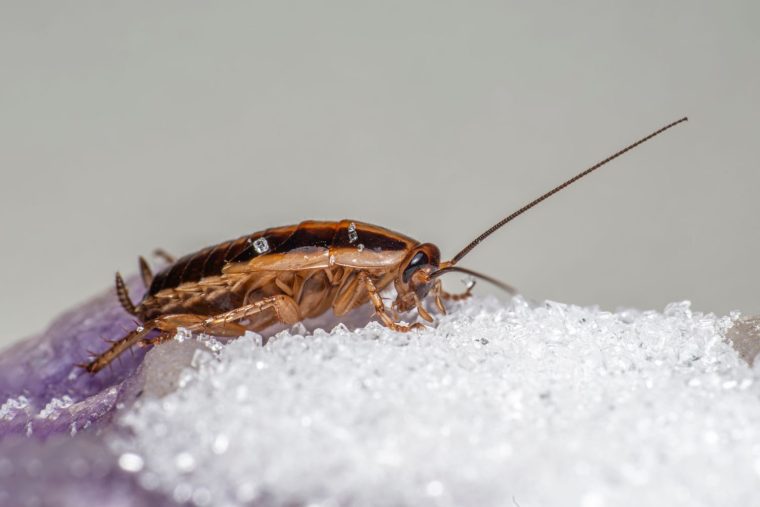
Bed bugs are the pest people are most embarrassed to call about, and the one most often treated badly. They are not a sign of a dirty home. They travel in luggage, second-hand furniture, taxis and delivered parcels, and they turn up in immaculate houses and good hotels.
Here is how to tell if you have them, what actually works, and why the second treatment matters more than the first.
How to know it is bed bugs
Bites alone are not proof, because people react very differently and some do not react at all. Look for the physical evidence instead.
- Bites in a line or a small cluster, usually on arms, shoulders, neck or legs, appearing overnight
- Small dark spots on the sheet, the mattress piping or the bed frame joints. This is digested blood.
- Tiny pale shed skins in the mattress seam or in the screw holes of a wooden frame
- A sweet, musty smell in a room with a heavy infestation
Where to look
Strip the bed and check, in this order: the mattress piping and seams, the joints and screw holes of the frame, behind the headboard, the skirting board behind the bed, and then any upholstered chair in the room. They are flat enough to fit anywhere a credit card would.
Why home remedies do not work
Almost everyone tries something before calling. It is worth knowing what these actually achieve.
- Supermarket aerosols. Kill a few on contact and scatter the rest into the next room. This is the single most common reason a contained problem becomes a whole-house one.
- Paraffin or diesel on the frame. Dangerous, damages the furniture, and does nothing to the eggs.
- Throwing out the mattress. Rarely necessary, and pointless on its own, because they are also in the frame and the skirting.
- Moving to the sofa. Understandable, and the worst thing you can do. You take them with you and now the sitting room is infested too.
What does help
Washing bedding and clothing at the hottest temperature the fabric allows, then drying it thoroughly, genuinely works. Heat kills every life stage including the eggs. Do it before the treatment, not after.
Why one treatment is never enough
This is the part that decides whether the job succeeds. Bed bug eggs are laid in seams, cracks and screw holes, and they are largely unaffected by the spray that kills the adults. They hatch over the following one to two weeks.
If nobody returns in that window, you are back where you started, except the survivors have now spread further. A proper treatment is two visits, ten to fourteen days apart. Anyone offering one visit is either inexperienced or hoping you will pay again later.
How to prepare
- Strip all bedding and wash it on the hottest wash the fabric allows, then dry it fully.
- Bag clothing and fabric from the affected room. Wash and dry on high heat, or keep it sealed until after the second visit.
- Clear the floor and empty bedside drawers so skirting and frame joints can be reached.
- Pull the bed and any seating away from the walls.
- Cover fish tanks and remove pet bowls and bedding.
- Do not spray the room yourself beforehand.
What happens during treatment
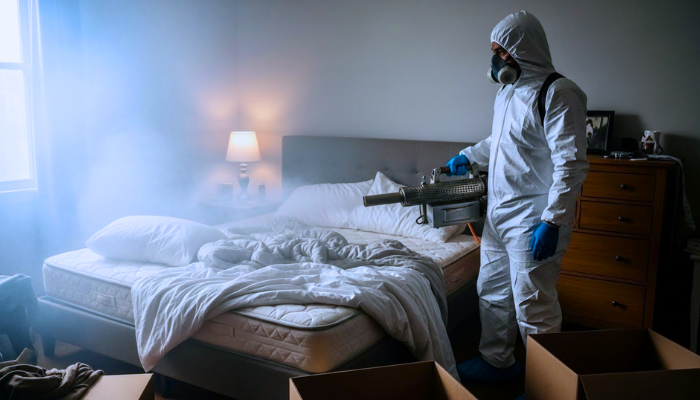
We inspect first to confirm how far it has spread. Then steam where the surface allows, followed by a residual application to mattress seams, frame joints, screw holes, skirting and cracks. The room stays empty for four to six hours, then you ventilate it.
Ten to fourteen days later we return and repeat, catching everything that hatched. Seeing the occasional bug between visits is normal and does not mean the treatment failed.
If you live in a flat or run a rental
In apartment blocks bed bugs move between units. If your neighbour has them, treating only your flat will hold for a while and then fail. It is worth raising with building management, awkward as that conversation is.
For hotels, hostels and Airbnbs, deal with it immediately and treat adjoining rooms. One review mentioning bed bugs costs far more than the treatment.
Get it dealt with
Send us a photo of the mattress seam or the bites and we will tell you what you are dealing with. See our bed bug fumigation service for what the two-visit treatment covers.