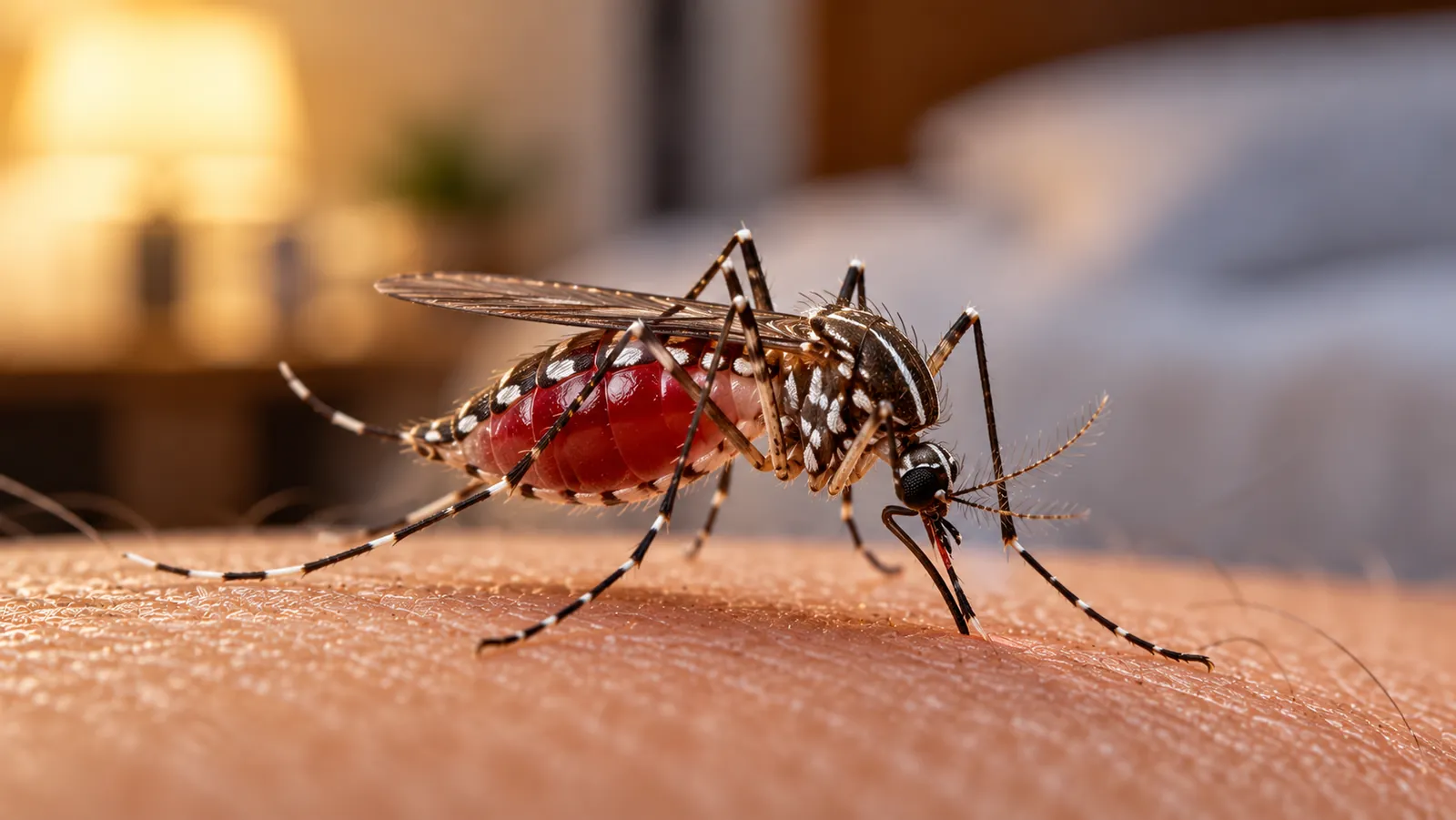
Mosquitoes are more than a nuisance in Nairobi. The constant whine and bites at night ruin sleep, and some species carry disease. The city's large, high-altitude setting means malaria transmission in Nairobi itself is low compared with the coast and the lake region, but day-biting Aedes mosquitoes, which can carry dengue and chikungunya, have been recorded in Nairobi neighbourhoods, and Culex mosquitoes breeding in drains and septic water are a familiar night-time pest across the city.
The good news is that mosquitoes are very predictable. They need standing water to breed, and they rest on shaded walls and vegetation between bites. Treat both and numbers fall sharply.
Common mosquito problems in Nairobi homes and compounds
- Night biting in bedrooms, often from Culex mosquitoes breeding in blocked drains, septic tanks and stagnant water nearby.
- Day biting outdoors and in offices, often from Aedes mosquitoes breeding in small containers, tyres and plant saucers.
- Surges after the rains, when gutters, potholes, building sites and discarded containers fill with water.
- Compounds next to building sites, rivers or open drains, where breeding sites are outside your control.
- Restaurant terraces, schools and event venues where people sit outdoors in the evening.
Where mosquitoes breed
A mosquito can go from egg to biting adult in about a week in warm weather, and it only needs a small amount of still water. The usual culprits are the ones nobody thinks of:
- Blocked roof gutters and flat roofs that hold water.
- Plant pot saucers, buckets, jerrycans and water drums without tight lids.
- Old tyres, broken containers and building materials stored outside.
- Uncovered or poorly sealed water tanks.
- Drains that never fully empty, and septic or soak-pit covers that are cracked.
- Ornamental ponds and water features without fish or circulation.
- Tree holes, bamboo stumps and leaf axils of some plants.
Our mosquito control approach
1. Breeding-site survey and source reduction
We walk your compound with you and identify standing water and breeding sites. Removing or covering them, known as source reduction, is the most effective and longest-lasting part of mosquito control. You get a short written list of what to empty, cover, drain or repair.
2. Larval management
Where water cannot be removed, such as a drain, a water feature or a soak pit, we advise on keeping it flowing, covered or screened, and on suitable larval control so that mosquitoes do not complete their life cycle there.
3. Indoor residual spraying
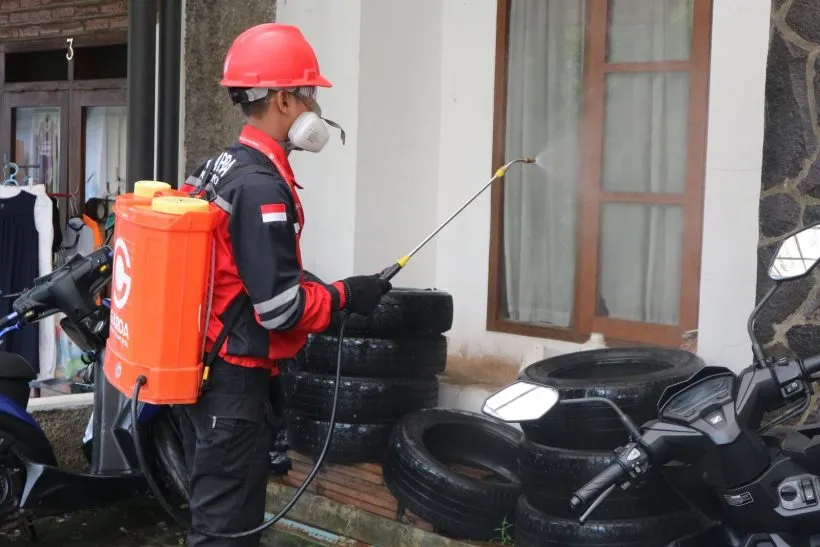
We apply a residual treatment to interior walls, ceilings and other resting surfaces in bedrooms, living rooms and offices. Mosquitoes that land on treated surfaces later still pick it up, so the treatment keeps working for weeks rather than clearing a room for one evening.
4. Outdoor treatment and fogging
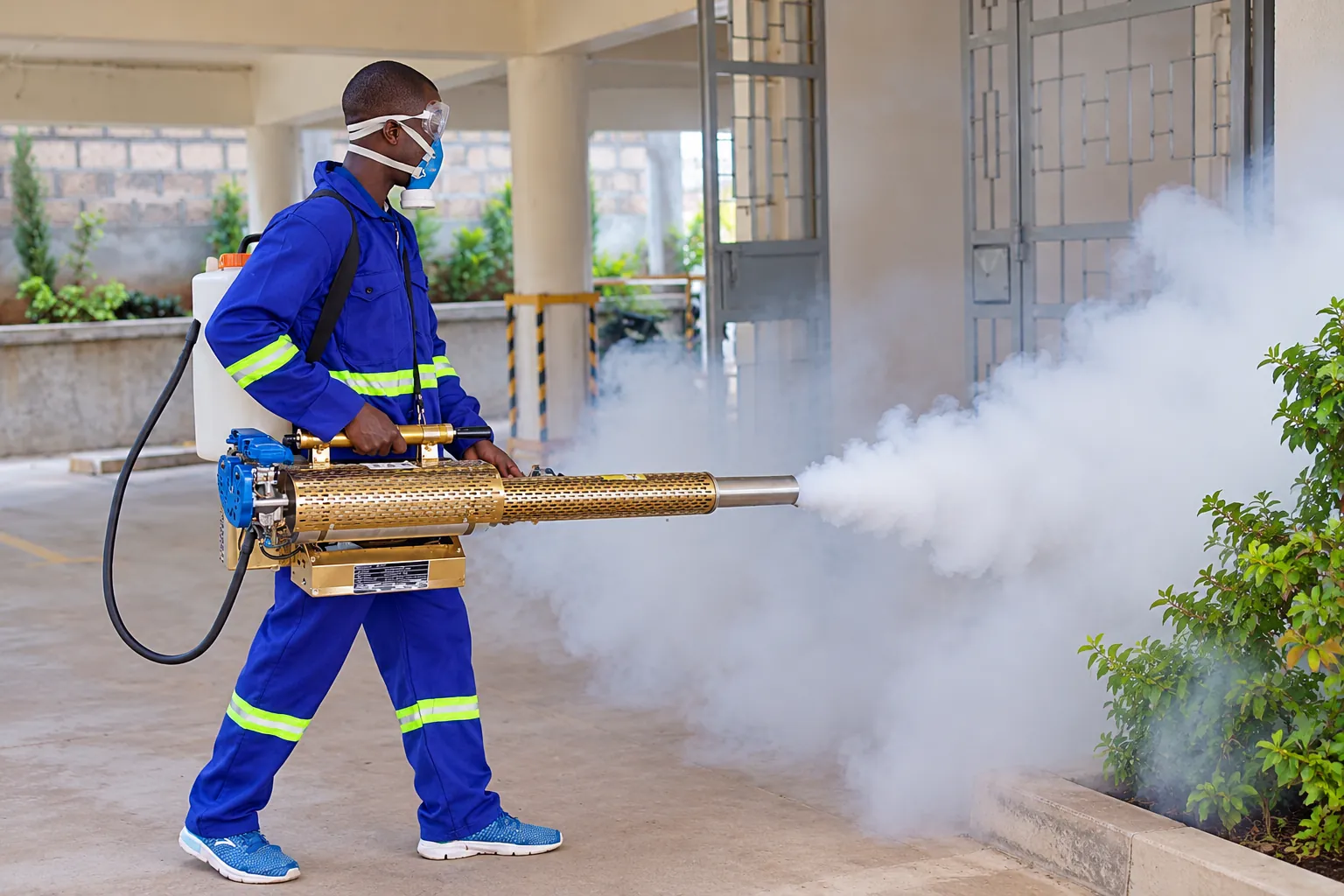
For gardens, compounds, hedges and outdoor seating, we treat shaded vegetation where adults rest and, where it is useful, fog to knock down the flying adult population quickly. Fogging is a short-term measure. It is most useful before an event or during a surge, and it works best when breeding sites have already been dealt with.
Indoor spraying or outdoor fogging?
| Indoor residual spraying | Outdoor fogging | |
|---|---|---|
| Best for | Bedrooms, living rooms, offices, anywhere people sleep or sit still | Gardens, compounds, terraces and event grounds |
| How it works | Product stays active on wall surfaces; mosquitoes that land pick it up | Fine mist kills flying adults in the treated area |
| How long it lasts | Several weeks on treated surfaces | Hours to days; it does not prevent new arrivals |
| Do we leave? | Out of treated rooms for 2 to 3 hours, then ventilate | Everyone indoors during fogging and for 2 to 3 hours after |
| Repeat | Seasonally, or when biting picks up | Before events or during surges in the rains |
Practical prevention at home
- Empty, scrub and turn over anything that holds water once a week.
- Keep water drums and tanks tightly covered; screen overflow pipes.
- Clear gutters before the rains and after storms.
- Fill or drain low spots in the compound where water collects.
- Fit and repair window and door screens; use treated bed nets where needed.
- Keep hedges and long grass near doors trimmed, because adults rest in shade.
Before the visit
- Tell us when biting happens (day or night) and where, so we can tell which mosquitoes you are dealing with.
- Clear furniture away from walls in the rooms to be sprayed.
- Cover or put away food, utensils, toothbrushes and children's toys.
- Cover aquariums, switch off their pumps, and bring pets and pet bowls indoors for outdoor fogging.
- Close windows during outdoor fogging.
After treatment
- Stay out of treated rooms for the time we give you, then ventilate.
- Avoid washing or repainting treated walls for the period we advise.
- Work through the breeding-site list. This is the part that makes the treatment last.
- If numbers climb again after heavy rain, check for new standing water before booking another treatment.
Treatment safety
We use registered products at label rates and apply them to resting surfaces and vegetation rather than food areas. Fogging is not carried out near open food, water sources for animals or ponds with fish. Beekeepers and anyone keeping fish or poultry should tell us before the visit so that we can plan around them.
Seasonal planning and maintenance
Nairobi's long rains (roughly March to May) and short rains (roughly October to December) bring the biggest increases. Many households and businesses book a survey and indoor treatment as the rains begin, then a top-up during the peak. Restaurants, schools and event venues often prefer a regular schedule. We can plan visits around the season rather than a fixed calendar.
What affects the price
| Factor | Effect |
|---|---|
| Size of the house and number of rooms sprayed | More wall area means more product and time |
| Size and type of compound | Large gardens, hedges and multiple buildings take longer to survey and treat |
| Fogging | Outdoor fogging is priced separately from indoor spraying |
| Breeding sites | Drains, ponds or tanks needing larval management add time |
| Frequency | Seasonal or scheduled programmes can be planned and priced together |
Common mistakes
- Relying on fogging alone. It clears the air today and does nothing about tomorrow's mosquitoes.
- Ignoring small containers. A bottle cap of water is enough for breeding.
- Repainting or washing walls right after indoor spraying.
- Forgetting the neighbours. If the source is next door, a quiet word or a shared treatment helps everyone.
Why use a professional
A professional survey often finds the breeding site in minutes, which may save you a treatment altogether. When treatment is needed, a professional chooses a residual product suited to your wall surfaces, applies it where mosquitoes actually rest, and times outdoor work for when it will do most good.
Areas we serve
We provide mosquito control across Nairobi, including Karen, Runda, Lavington, Lang'ata, Kileleshwa and Westlands, and nearby areas such as Ruaka, Ruiru, Kikuyu, Ngong, Syokimau and Kitengela, where larger compounds and gardens are common.