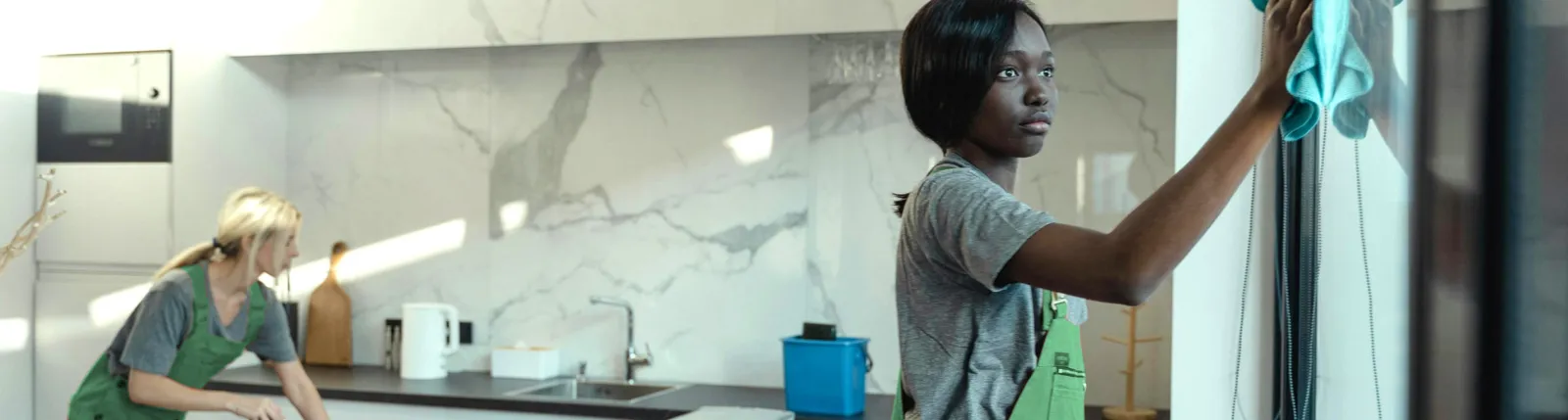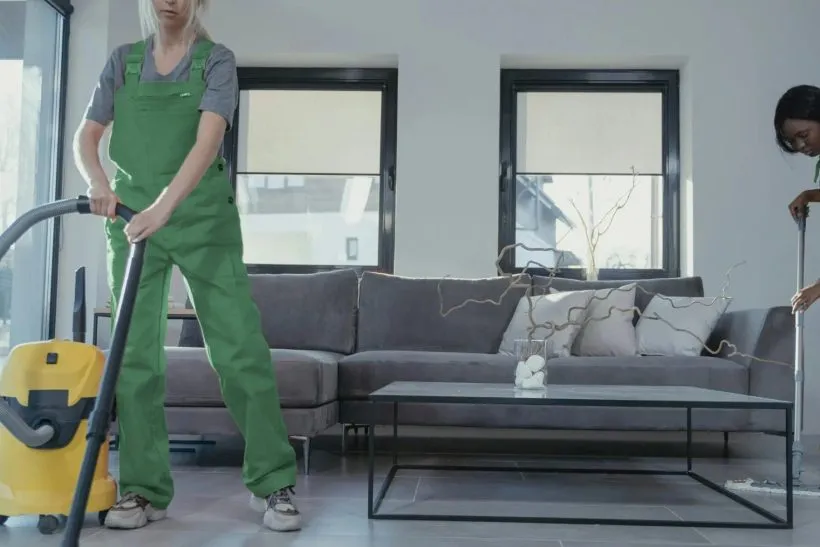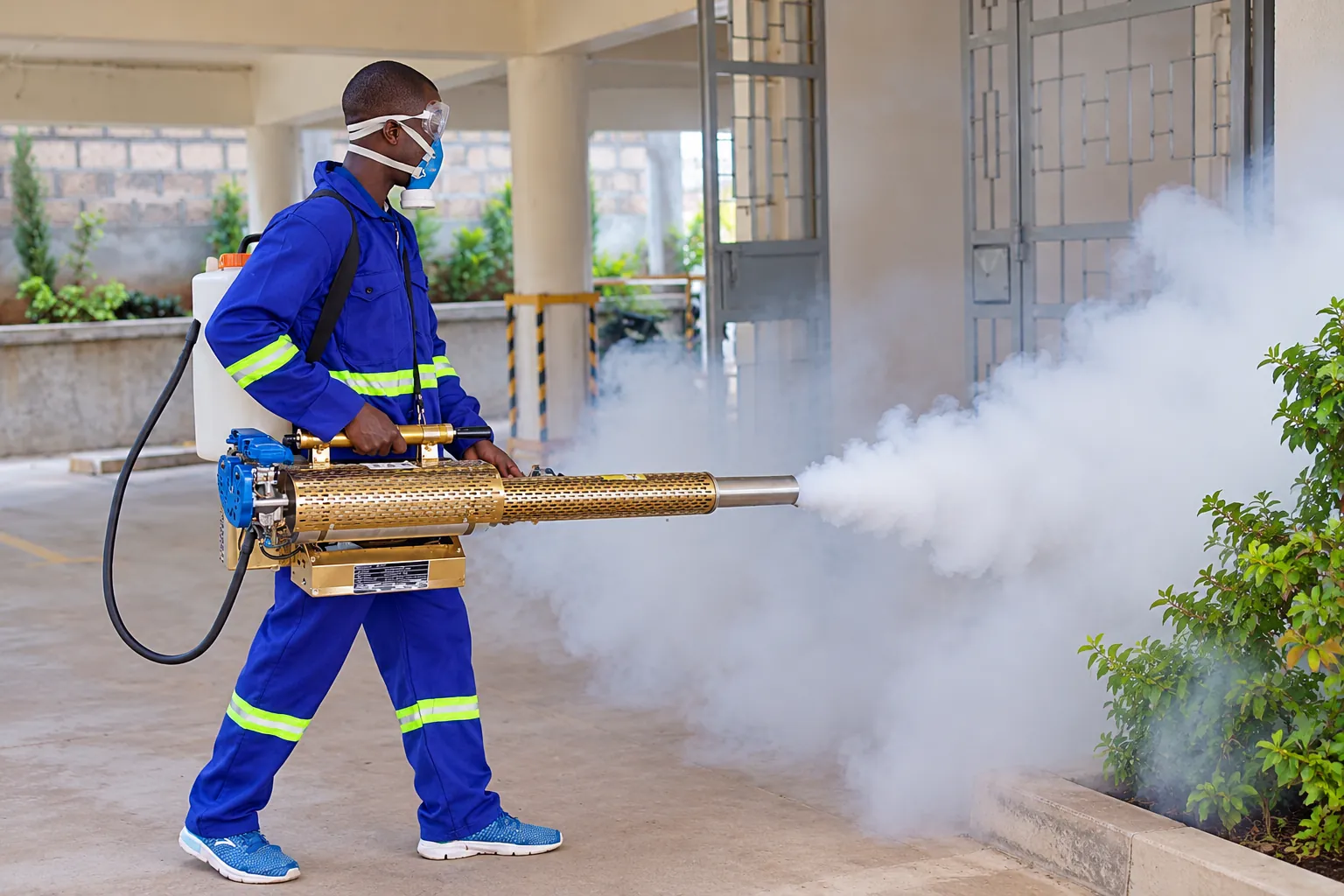
The last thing that happens on a building or renovation project is the clean, and it is the first thing the owner, buyer or tenant notices. A beautiful new kitchen covered in a film of dust, a bathroom with grout haze on the tiles or windows with paint flecks and sticker residue undo months of good work.
Post-construction cleaning, sometimes called builders' cleaning or handover cleaning, is the specialist clean that takes a property from building site to ready to live in or trade from.
What post-construction cleaning means
It is a detailed, staged clean after building, renovation or fit-out work, focused on the residue that construction leaves behind: fine dust, cement and mortar splashes, grout haze, paint, adhesive and protective film, silicone smears and stickers. It needs different equipment, products and methods from an ordinary clean, and it needs to be done in the right order.
Initial debris removal versus detailed cleaning
Two very different jobs often get confused:
- Initial debris removal clears offcuts, packaging, broken materials and bulk rubble from the site. This is usually the contractor's responsibility, and large volumes need a skip or a waste removal service.
- Detailed post-construction cleaning starts once the bulk is gone. It removes dust from every surface and clears the residue from finishes so the property can be handed over.
We focus on the detailed clean and can bag light debris. Bulk rubble removal is quoted separately or left to the contractor.
Who it is for
- Homeowners completing a new build or renovation.
- Contractors and developers preparing units for handover.
- Landlords refurbishing a unit before letting.
- Businesses completing an office or shop fit-out.
- Property managers dealing with snag lists and handovers.
Why construction dust is so difficult
Construction dust from cutting, sanding and drilling is fine enough to stay airborne for hours and settle again after you have cleaned. It gets inside cupboards, sockets, light fittings, window tracks and air vents. A single pass with a domestic vacuum leaves a new film across every surface by the next morning. That is why we work top down, use vacuums with fine filtration, and clean in stages.
What we clean
| Area | What we do |
|---|---|
| Floors and tiles | Remove dust, cement and grout haze using methods matched to the tile; clean grout lines; final mop |
| Windows and frames | Remove protective film, stickers, paint and silicone from glass with blades; clean frames, tracks and sills |
| Doors and fittings | Clean doors, frames, handles, hinges and ironmongery; remove paint and adhesive |
| Cabinets and storage | Vacuum and wipe inside and outside kitchen cabinets, wardrobes and shelving |
| Kitchens | Worktops, splashbacks, sinks, appliances inside and out, extractor hoods, removal of protective films |
| Bathrooms | Sanitaryware, tiles, shower screens, taps and mirrors; grout haze and silicone smears |
| Walls and ceilings | Dust removal, cobwebs, light fittings and switch plates; spot cleaning where paint allows |
| Final detail | A last pass on glass, fittings and floors immediately before handover |
Paint splashes and residue
Paint on glass comes off with a blade held at the right angle. Paint on ironmongery and sanitaryware needs a suitable solvent, always tested first. Paint on porous surfaces such as unsealed stone or grout may not come out fully, and we tell you before we start.
Adhesive residue and protective film
Protective films and stickers left on windows, doors and appliances bake on in the sun. We peel them, soften the remaining adhesive and remove it without scratching the surface.
Surface-safe cleaning
The wrong acid on the wrong tile is a defect you cannot undo. Natural stone, powder-coated aluminium, some engineered worktops and polished floors are permanently damaged by the wrong product. We ask about finishes during the assessment and test every product on an inconspicuous area first.
How we approach a post-construction clean
- Site assessment. We look at the size, the finishes, the amount of dust and residue and the handover date.
- Rough clean. Light debris and protective film removed, bulk dust extracted, heavy residue taken off. This is the dirtiest stage.
- Full clean. Once the dust has settled, every surface is cleaned properly: floors, glass, ironmongery, sanitaryware, kitchens, skirting and frames.
- Detail and handover clean. A final pass on glass, fittings and floors just before handover, so the client walks into a finished property.
On larger sites the first two stages can be days apart.
Inspection checklist
Before we leave, we check:
- No dust on horizontal surfaces, inside cupboards, on light fittings or switch plates.
- Glass clear of film, paint, stickers and smears.
- Tiles free of grout haze and cement.
- Sanitaryware and taps clean and free of silicone smears.
- Door and window tracks clear.
- Floors clean, with no residue in corners or along skirting.
See the full room-by-room version in our post-construction cleaning checklist.
Coordinating with contractors
- Book after all trades, including painters, electricians and plumbers, have finished.
- Agree site access, water and power, and where waste can be left.
- Share the handover date and any snag work still planned.
- Tell us about delicate finishes and any manufacturer cleaning instructions.
If snagging work creates new dust after our clean, a short touch-up visit can be arranged.
Safety considerations
Building sites can still have hazards: exposed wiring, unfinished balustrades, sharp offcuts and wet paint. We wear appropriate protective equipment, use fine-filter vacuums to control dust, ventilate when using solvents and do not work in areas that the contractor has not declared safe.
What is excluded
- Bulk rubble and large volumes of waste, which need a skip or waste removal service.
- Hazardous materials such as asbestos, chemical spills or contaminated soil, which need specialist providers.
- Mould remediation and water damage restoration.
- External facade cleaning and high-level work requiring scaffolding.
- Repairs to finishes damaged during construction.
What affects the quote
| Factor | Effect |
|---|---|
| Size of the property | Floor area and number of rooms |
| Amount of dust and residue | Heavy cement, paint and adhesive take much longer |
| Finishes | Natural stone, specialist glass and polished floors need careful methods |
| Number of stages | Large sites may need a rough clean and a final clean on separate days |
| Windows | Number of panes, height and access |
| Timing | Weekend or tight handover deadlines |
Common mistakes
- Cleaning before all trades have finished, then needing to do it again.
- Booking an ordinary deep clean for a property with cement and paint residue.
- Using strong acid on tiles or stone without testing.
- Leaving the clean until the morning of handover.
Why use a professional
Post-construction cleaning protects expensive new finishes. A professional team knows which product and tool suits each surface, works in the right order, and controls dust instead of moving it around. The result is a handover that reflects the quality of the build.
Areas we serve
We clean new builds, renovations and fit-outs across Nairobi and its growing outskirts, including Karen, Runda, Lavington, Kileleshwa, Kilimani, Westlands, Syokimau, Kitengela, Ruaka, Ruiru, Kikuyu and Ngong.